
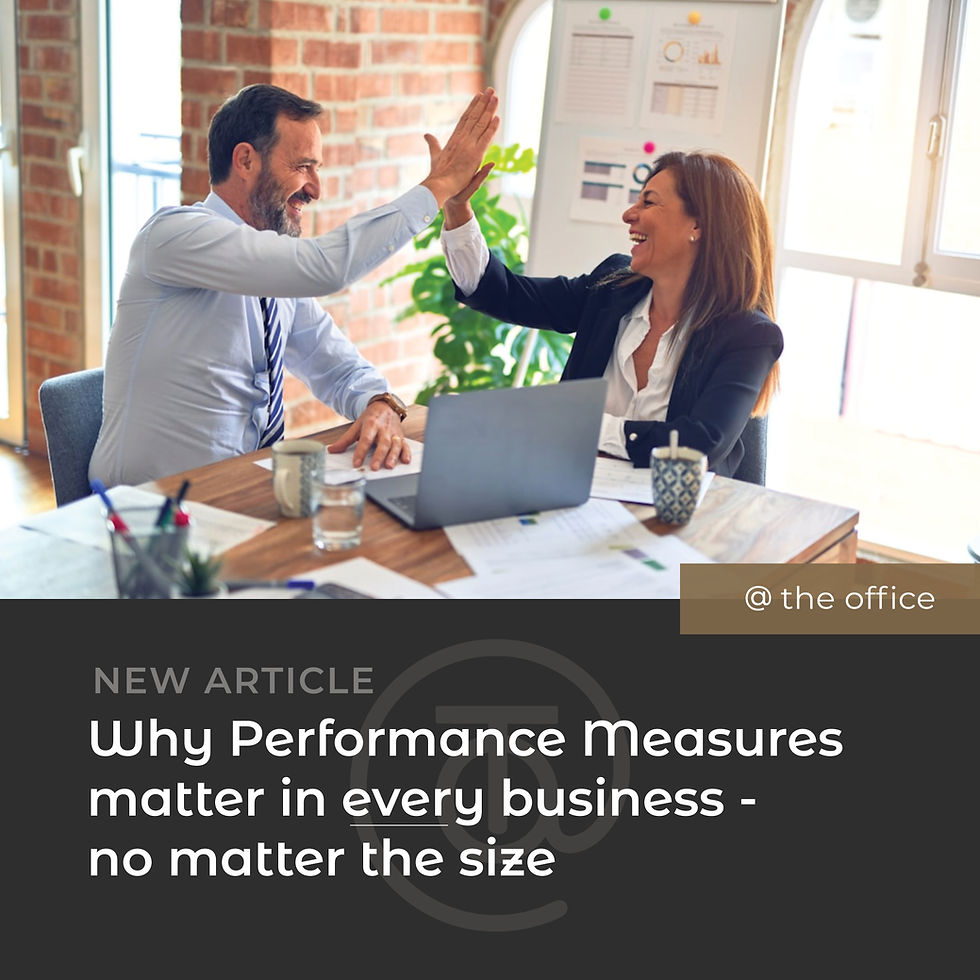
Why Performance Measures matter in every business - no matter the size.

If your business does not have clear performance measures in place, you are not alone.
Many businesses, particularly small to medium enterprises, operate at pace. Client work, deadlines, staffing,
compliance, and day-to-day operations take priority. Leaders often intend to put structured performance frameworks in place, but time slips away.
The reality is, when performance is not clearly defined, people are left to interpret success for themselves.
And that is where problems begin.
Performance Should Never Be Vague
Every person in an organisation should know what is expected of them.
This applies to:
leadership teams
department managers
frontline employees
administration staff
small teams and large workforces alike
Every individual should understand:
what success looks like in their role
what their priorities are
how their work contributes to the business
what behaviours are expected
what happens if expectations are not met
This is not about being rigid or punitive. It is about being clear, fair, and consistent.
Without clarity, businesses often experience confusion, inconsistent standards, underperformance, and reactive management.
A Lack of Structure Creates Avoidable Risk
In our experience, most workplace issues are not caused by “bad employees.” More often, they are caused by gaps.
Gaps in:
leadership
communication
accountability
systems
When these gaps exist, people naturally test boundaries. Expectations become unclear. Behaviour becomes inconsistent. Leaders become reactive rather than proactive.
Many of the investigations and misconduct matters we see could have been avoided if businesses had clearer performance measures, stronger frameworks, and more consistent leadership practices.
You Do Not Need a Complex System
One of the biggest misconceptions is that performance management needs to be complex. It does not.
A well-designed system should be:
simple
practical
relevant to your business
easy to maintain
If you currently have nothing in place, dedicating focused time, even just one week, can set up a performance framework that supports your business for the entire year.
That week can establish:
clear role expectations
performance measures (KPIs)
behavioural expectations aligned to values
structured check-in processes
team accountability
clarity around shared projects
Supporting procedures and policies
Once implemented, maintaining this system should only take a few hours each month or quarter.
Performance Should Be Part of Your Rhythm
Performance should not be discussed once a year. It should be part of how your business operates.
This includes:
regular team meetings
ongoing performance conversations
shared visibility of progress
clear communication around priorities
When performance is discussed regularly, it becomes constructive and normal. When it is avoided, it becomes reactive, emotional, and difficult.
Performance Measures Drive More Than Productivity
Strong performance frameworks do more than improve output.
They support:
engagement
fairness
accountability
communication
culture
profitability
When performance improves, businesses are better positioned to:
reward staff
invest in growth
build stronger teams
create sustainable success
Performance measures are not about control. They are about clarity.
Policies, Procedures and Performance Work Together
Performance measures do not sit in isolation.
They are most effective when supported by:
clear procedures (how work is done)
practical policies (boundaries and expectations)
Together, these create a framework that is:
consistent
defensible
easier to manage
Because yes, from time to time, people will go off track. Having clear systems in place ensures you can manage these situations confidently and fairly.
It Applies to Every Business
This is not just for large organisations. A business with five employees needs clarity just as much as a business with five thousand.
Smaller businesses often benefit even more from getting this right early, because it creates structure, discipline, and consistency from the outset.
Keep It Simple — But Do It Properly
@The Office, we focus on helping businesses simplify their people and performance frameworks.
Our approach is built on:
practical tools
clear structure
simple systems that actually work
We believe:
performance should be clear, not complicated
systems should support leadership, not burden it
good structure creates better outcomes for people and business
When your performance framework is aligned:
leadership becomes easier
teams perform better
conversations improve
profit has room to grow
people can be recognised and rewarded
Final Thought
If your business has been too busy to implement performance measures, consider this your reminder to stop and plan. One focused week can shape the next twelve months.
The time invested in building a simple, effective performance framework is almost always less than the time spent managing:
confusion
underperformance
misconduct
misalignment
Performance measures matter. Not because they are corporate. Because they create clarity. And clarity changes everything.


Comments